
The Question That Changed My Career
The Question That Changed My Career
Twenty years of teaching led me to one question I couldn't stop asking.
For more than twenty years, I dedicated my career to helping children learn.
I began as a Special Education teacher, working closely with students whose learning needs, developmental differences, and life experiences often required individualized support. While I valued that work deeply, I also became increasingly passionate about creating more inclusive learning environments. That passion eventually led me into the general education classroom, where I could help bridge the gap between students with diverse learning profiles and their peers.
Alongside my work in public education, I spent years tutoring students and supporting families outside of the classroom. These experiences gave me a unique perspective, allowing me to see not only how children performed academically, but also how they functioned emotionally, socially, and developmentally across different environments.
Throughout my career, I was never satisfied with simply teaching curriculum.
I became a lifelong student of learning itself.
I immersed myself in evidence-based instructional practices, executive functioning development, learning differences, trauma-informed education, behavior, neurodevelopment, and strategies that help students overcome barriers to success.
I taught coping strategies.
I developed compensatory strategies.
I helped students strengthen organization, planning, task initiation, emotional regulation, and self-advocacy skills.
I worked alongside children carrying the invisible weight of anxiety, trauma, low self-confidence, and repeated academic frustration.
Again and again, I watched students work incredibly hard to compensate for challenges that often seemed to originate beneath the surface of what we traditionally think of as "learning."
And while many students made meaningful progress, I couldn't shake the feeling that there was something deeper I needed to understand.
The question that kept returning was this:
Why are some children working so much harder than they should have to simply access their potential?
Why were bright children struggling to focus?
Why did some students master a concept one day only to seem overwhelmed by it the next?
Why were so many families investing years in therapies, tutoring, and interventions, yet still feeling and realizing that something fundamental was being missed?
The more I studied neurodevelopment, sensory processing, nervous system regulation, executive functioning, and learning, the more I realized that many of the challenges I was seeing were not purely academic. They were often rooted much deeper, within the nervous system itself.
I began to understand that before a child can confidently read, write, learn, organize, communicate, or self-regulate, their brain must first be able to process and integrate information efficiently.
That realization led me to a new question:
What if listening is one of the most overlooked foundations of learning, communication, emotional regulation, and human connection?
The search for that answer ultimately led me to the Tomatis Method.
Why I Renewed My Commitment to the Tomatis Method and Chose to Become a Level 4 Expert Consultant
What began as professional curiosity quickly became deeply personal.
When I first discovered the Tomatis Method, I was intrigued by its focus on listening, not simply hearing, but the brain's ability to accurately process, organize, and respond to sound.
As I learned more, I recognized connections to many of the struggles I had witnessed throughout my career. Difficulties with attention, regulation, language, executive functioning, learning, social engagement, and emotional resilience often seemed interconnected in ways traditional educational approaches could not always address.
Eventually, I made the decision to implement the Tomatis Method with my own children.
What I witnessed transformed my understanding of what was possible.
I saw improvements not only in learning, but in confidence, communication, emotional flexibility, self-regulation, and overall functioning. As both a practitioner and a parent, I experienced firsthand the profound impact that targeted listening stimulation can have on the nervous system.
It became increasingly clear that listening is about far more than receiving sound.
Listening influences how we engage with our environment, connect with others, process language, regulate emotions, learn new information, and navigate everyday life. When listening improves, many other areas of development often improve alongside it.
The more I worked with families, the more I felt called to deepen my expertise.
That calling led me to renew my commitment as a certified Tomatis Practitioner and invest in becoming a Level 4 Expert Consultant.
This was not a casual decision.
Advanced training requires significant investment of time, financial resources, travel, clinical study, and ongoing professional development. In many ways, it required me to reimagine the future of my life's purpose and calling. Through this I made the difficult decision to step away from teaching so I could fully focus on the work I believe has the potential to create the deepest and most lasting impact.
I chose this path because families deserve practitioners who are committed to continual growth.
They deserve professionals who are willing to remain students themselves.
They deserve practitioners who understand that every brain is unique and that meaningful progress often requires looking beyond symptoms to identify the underlying factors affecting nervous system organization, learning, and regulation.
My goal has never been simply to help children compensate for their challenges.
My goal is to help create the conditions that allow one to overcome their learning challenges, to close fundamental academic gaps, to access their strengths more fully while establishing confidence and autonomy.
Today, I am privileged to work with children, adolescents, and adults experiencing a wide range of challenges, including executive functioning difficulties, learning differences, developmental delays, ADHD, Autism, Dyslexia, PDA, emotional regulation concerns, attention challenges, and the effects of chronic stress and trauma.
What continues to inspire me is that every individual's journey is unique.
There is no one-size-fits-all solution.
There is only the opportunity to carefully listen, understand the person in front of us, and support the brain's remarkable capacity for growth, adaptation, and change.
Renewing my certification and pursuing Expert-level training represents far more than a professional milestone.
It represents a commitment.
A commitment to continue learning.
A commitment to continue growing.
A commitment to continue serving families with the highest level of knowledge, care, and dedication possible.
Because when we improve the way a person listens, we may change much more than their ability to process sound.
We may change how they learn.
How they connect.
How they communicate.
How they experience themselves.
And ultimately, how they move through the world.
That possibility is what changed my career.
And it is why I chose to continue this journey.
From My Heart to Yours
If you're reading this as a parent, there's a good chance you've spent more time than most people can imagine searching for answers.
You've attended evaluations, sat through meetings, completed therapy exercises, advocated at school, researched late into the night, and wondered whether you're doing enough.
You may have been told to be patient.
You may have been told your child will eventually outgrow it.
You may have been told that their struggles are simply something they must learn to live with.
And while sometimes those messages contain pieces of truth, they often leave parents feeling unseen, overwhelmed, and alone.
I know that feeling.
Not only because I have worked alongside families throughout my career, but because I have sat in the parent's chair myself.
I know what it feels like to watch a child work harder than their peers and wonder why.
I know what it feels like to see incredible potential and wish the path to accessing it felt easier for them.
I know the deep desire we carry as parents to help our children thrive while questioning whether we're making the right decisions along the way.
One of the greatest gifts the Tomatis Method has given me is hope.
Not false hope.
Not the promise of perfection.
But the hope that the brain is capable of growth.
The hope that change is possible.
The hope that when we better understand the nervous system, we can often support children and adults in ways that feel more connected, compassionate, and effective.
Every person who walks through my doors brings a unique story.
There are no labels to fix.
No boxes to fit into.
Only individuals with strengths, challenges, potential, and a nervous system that deserves to be understood.
That perspective continues to inspire me every day.
As I continue my journey as a Level 4 Expert Consultant, my commitment remains simple:
To keep learning.
To keep growing.
To keep listening.
And to walk alongside families with compassion, curiosity, and the belief that meaningful change is possible.
Thank you for allowing me to be part of that journey.
Warmly,
Summer Brooks MA.ED
Tomatis® Practitioner & Level 4 Expert Consultant
When Tutoring Isn't Enough: The Missing Foundation for Learning
For years, I worked directly with students who struggled with reading, writing, attention, organization, and academic confidence. While many made progress through targeted instruction, I repeatedly noticed something important: some children weren't struggling because they lacked intelligence or effort. They were struggling because the neurological foundations that support learning were not fully developed.
The more I learned about neurodevelopment, auditory processing, sensory integration, and nervous system regulation, the more I realized that traditional tutoring often addresses the symptoms rather than the root cause.
Learning Requires More than Academic Instruction
Learning requires far more than academic instruction.
Before a child can successfully read, write, organize, focus, communicate, or regulate emotions, their brain and nervous system must be ready to support those skills.
When foundational systems are under stress, children may experience:
Difficulty sustaining attention
Executive functioning challenges
Emotional dysregulation
Anxiety
Sensory sensitivities
Listening difficulties
Delayed language development
Inconsistent academic performance
In many cases, the issue isn't motivation or intelligence. The brain is simply working harder than it should to process information from the world around it.
This realization led me to the Tomatis Method.
Looking Beyond Symptoms: The Missing Pieces, Listening, Regulation and Connection
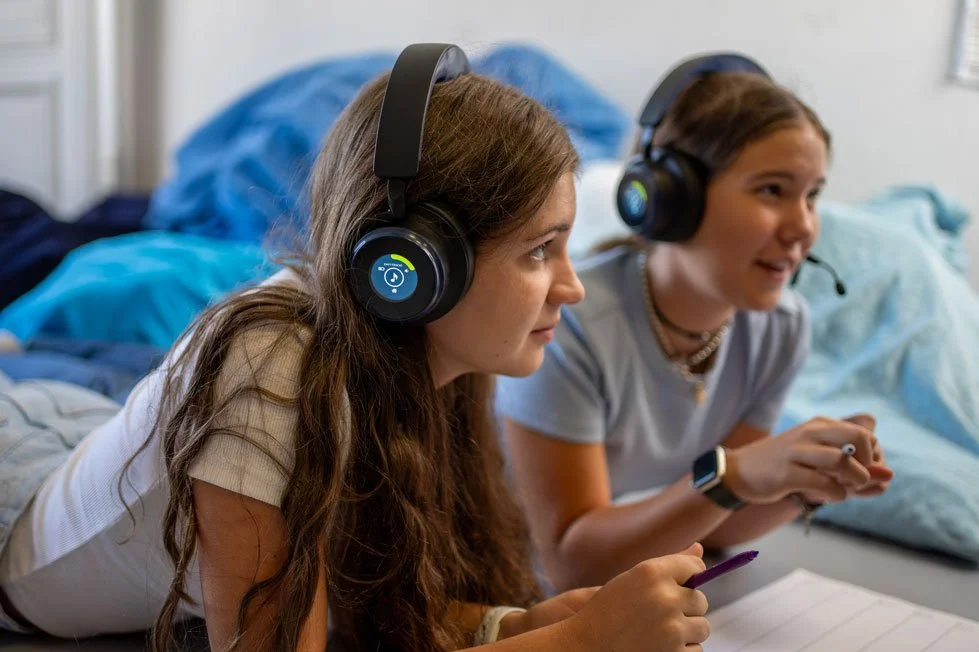
The Tomatis Method is a neuroscience-based listening program designed to support the relationship between the ear, brain, body, and nervous system.
Through specialized listening sessions, individuals engage with carefully filtered music and voice frequencies that help stimulate the auditory system and support communication between different areas of the brain.
Over time, many clients report improvements in:
Attention and focus
Emotional regulation
Communication
Listening skills
Confidence
Executive functioning
Learning readiness
A Neurodevelopmental Approach Beyond Traditional Tutoring
Today, my work has shifted from primarily teaching academic content to helping individuals strengthen the neurological foundation that makes learning possible.
For some clients, direct instruction remains an important piece of the process. Once the brain becomes more available for learning, skill development can occur more efficiently and with less frustration.
But the starting point is no longer simply asking, "How can we teach this skill?"
The starting point is asking, "What does the brain need in order to access this skill?"
Every Child Deserves the Opportunity to Thrive
Every child deserves to be understood from a strengths-based perspective. When we look beyond academic performance and begin supporting the systems that underlie learning, communication, regulation, and connection, new possibilities emerge.
My goal is not simply to help children perform better. My goal is to help them access their fullest potential for learning, growth, and engagement with the world around them.